Wednesday, August 6, 2014

Skratch Labs Hyper Hydration Mix - Drink with care!

Skratch Labs Hyper Hydration Mix
Skratch Labs released its Hyper Hydration Mix in mango flavor a little while back. 

This is NOT something to drink during exercise.  This is ONLY for people who sweat TONS of salt, and who are about to do some long, arduous event.  The science is super-interesting, so read all about it, and read all the warnings and find out why it's mango-flavored on the Skratch blog!

In short, Skratch designed the mix to be as easy on the stomach as they could make it, given that they needed to include enough sodium to match the sodium concentration of your blood.  The idea is to quickly push some extra water and sodium into a usable space (your cardiovascular system), from which your body can draw both water and sodium for sweat. 

If you don't sweat bunches, and you aren't about to engage in activities of awesome length and difficulty, this drink is a bad idea.  Again, read all the warning labels and instructions, then carefully experiment before race day.

Saturday, July 26, 2014

The Fat Salmon Recap


The Fat Salmon Open Water Swim took place this past Saturday.  The first time I ever swam an open water event, it was the Fat Salmon, so I always think of it fondly.

Speedy Reedy has its own connection with the race; we've been providing the swim caps for the Fat Salmon for years, now.  The last two years, we've partnered with Blue Seventy, so you'll see our two logos on one side, and The Salmon on the other.  This year, we also donated a Safe Swimmer Float for the raffle - it seemed like an appropriate prize.

Anyway, here follows a recap of the swim, provided by our Fat Salmon inside contact, Carol Peterman.


2014 Fat Salmon Open Water Swim


The cloudy skies and threat of rain on race day didn't dampen the enthusiasm of the Fat Salmon Open Water Swim participants in the least. Lining up to jump into Lake Washington at the Day Street Boat Launch, it was all smiles as they marched toward the start of the 3.2 mile swim to Madison Park.

A cheer from the spectators sailed out to greet the first swimmers spotted from the shore; four determined competitors battling it out to the finish. Zach Walters was the first to emerge from the water and cross the finish line, setting a new course record for the men's wetsuit division with a time of 1 hour and 42 seconds.  Steve Sholdra was right behind him, finishing in 1 hour and 46 seconds, also setting a new course record for the men's non-wetsuit division.

For the first time in the 15 year history of the Fat Salmon race there was a tie!  Madeline Klobuchar and Shannon Woods tied for first place in the women's non-wetsuit division with a finish time of 1 hour, 12 minutes and 36 seconds.  Christine Avelar locked up first in the women's wetsuit division, finishing in 1 hour, 10 minutes and 17 seconds.

The transition from water to land can be a wobbly one. Volunteers were at the ready to help swimmers quickly find their land-legs and hustle down the finish chute to cross the finish line.

The 2014 Fat Salmon Swim goes down in the history books as a great success, thanks to the generous support of our sponsors.

What does it take to put on a fun and SAFE open water swim?
  • 30 Kayakers shepherding swimmers along the course
  • 23 Lifeguards watching from paddle boards, 2 in boats and 1 at the finish
  • 8 Motorboats -- each with a swimmer spotter and a Ham Radio operator
  • Ham Radio operators at the finish area relaying course status updates
  • 2 Harbor Patrol boats monitoring lake traffic
  • 1 Jetski for quick course exit/rescue
  • 2 Paramedics and an ambulance stationed at the finish
  • 1 MD roving the park post-race, looking for any ill or injured swimmers
  • and MANY other volunteers

Thursday, June 19, 2014

The New Newtons

Newton did a nice redesign of their main road shoes.  The Gravity and Distance have been around for a while.  With the 2014 updates, they add a fifth lug to the sole, fill in the space under the arches, and cut off some rubber from the heel of the Gravity.

The reactions we've had from present Newton runners have been positive.  Having five lugs on the sole instead of four puts one lug at each edge of the forefoot, which gives a more stable feeling side-to-side.  The Gravity and Distance keep their low drop from heel to toe.

The Energy, which is a shoe Newton added to their lineup last year, has a larger drop than the Gravity or Distance (6mm versus 3mm for the Gravity, 2mm for the Distance), more cushion and more rubber on the sole.  It's surprisingly light, though.  The Energy is meant to be an introductory shoe for people who want to move to a forefoot strike from a heel strike.  The sole will hold up to heel striking, which tends to afflict us as we fatigue and our form deteriorates, and the larger heel-toe drop is closer to the drops of traditional running shoes to help ease you through the transition to forefoot running.

The new 5-lug Newton soles.
In the shop, we're carrying the new Gravity, which still runs $175, and the Energy, which costs $119.


Thursday, May 22, 2014

Aero helmets have lost their tails. Why?

The last couple years have seen some new kinds of aero helmets show up on the market.  These helmets don't have a long, tapered tail like a traditional aero helmet.  Some, which I would assign the description of "Aero Road Helmet", have no tail at all, and look like regular road helmets with fewer vents.  Others retain a vestigial tail and look a little more like the old aero helmets.

If we're talking about aerodynamics for triathletes, the main advantage of a tailless aero helmet over a tailed-style is that you don't incur an aero penalty when you change your head position while riding.  In particular, if you lower your head (to look at a computer, to grab a water bottle, to rest your neck), the tailless helmet won't increase your drag.  If you're using a tailed helmet, the gap between the tail and your back will open, causing extra turbulence, extra drag.  When we're talking about some of the distances that triathletes routinely race, most people I've spoken to, including myself (yeah, I talk to myself.  It's not creepy) agree that we don't keep perfect head position all the time on the bike. 

Speaking more subjectively, I believe many people prefer the look of the tailless helmets, especially the aero road helmets, because they look less like "serious" race equipment.  They feel less self-conscious doing a training ride with a tailless helmet like the Giro Air Attack than they would with a tailed helmet like the Giro Selector. 

Below are two examples of aero road helmets.  Giro makes the Air Attack Shield, which has a removable/flippable visor (this also increases the aero effect).  Catlike makes a closed-vent version of their Mixino road helmet, called the Mixino VD 2.0.  Both mimic the size and shape of regular road helmets, but have fewer vents.
Giro Air Attack Shield

Catlike Mixino VD 2.0


And here we have two examples of the snub-tailed aero helmet.  Notice the vestigial tail, more suited, as Rudy Project says, to multiple head positions.


Kask Bambino

Rudy Project Wing57


Wednesday, April 30, 2014

Ultra-Running Panel at Speedy Reedy, coming up on May 14th

Ultra-Running Panel and Q&A
6:00 p.m. on Wednesday, May 14th
Here at Speedy Reedy

We invite you to join us on the evening of May 14th for a conversation with ultra-distance athletes Randy Perkins, Jess Mullen, Andre Kajlich and Kyle McCoy.

Come, listen, ask questions.  The specific races our speakers will focus on are:

Jess Mullen: Badwater Ultramarathon
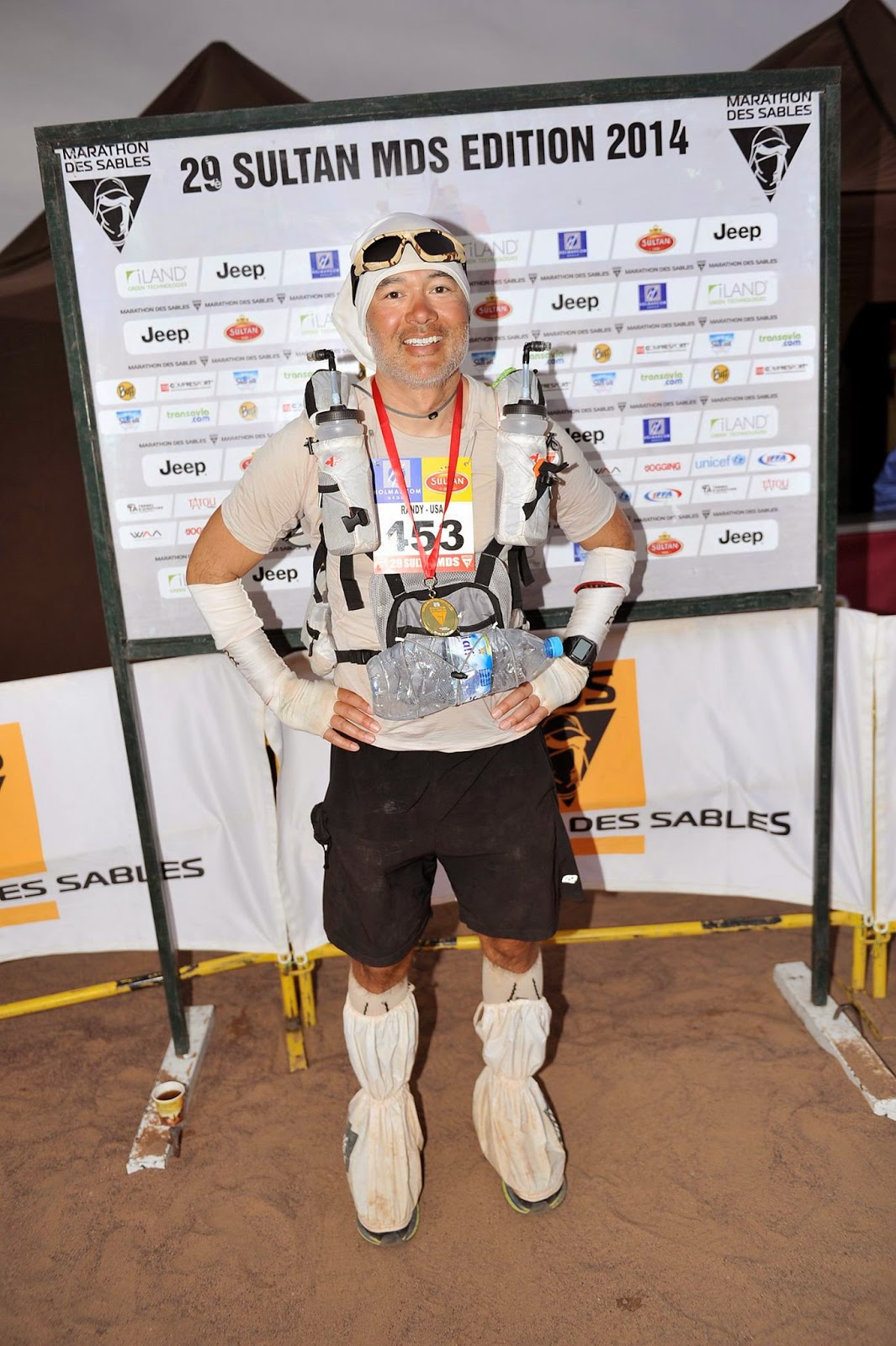
Randy Perkins: Marathon des Sables
Kyle McCoy: Atacama Crossing
Andre Kajlich: Brazil 135
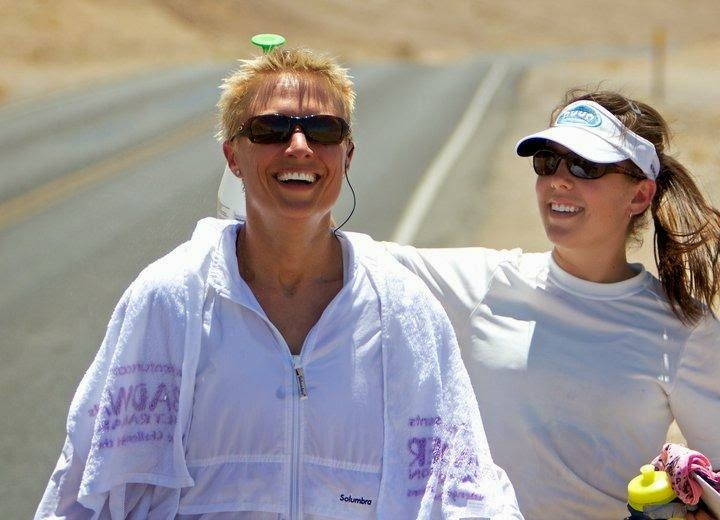
Jess Mullen at the Badwater Ultramarathon
Kyle McCoy running Atacama Crossing
Randy Perkins after finishing MdS
We will begin with a panel discussion and have each speaker relate some of their racing and training experiences, insights and stories.  Afterward, we'll open the floor for audience questions.

On a personal note, I've met Randy and Andre.  Both are down-to-earth, kind, very real people.  I'm sure Kyle and Jess are of the same sort.  I think you'll like them, and I think you'll be impressed and inspired by what they've done.


If you're curious about the races mentioned above, here are some brief summaries:

Badwater Ultramarathon
135 miles, previously run through Death Valley; now run to the west (because of permit issues), finishing on Mt. Whitney.  Total ascent: 19,000 feet.  Total descent: 14,600 feet.  48-hour cutoff.
Badwater website

Atacama Crossing
Dry.  Very dry.  6 stages over 7 days, through the Atacama Desert in Chile; total run distance of 250km (155 miles).  Racers must carry everything they need except for water, which is given out by ration at checkpoints over the course of each stage.
Atacama Crossing website

Marathon des Sables
Morocco. Also very dry.  And hot.  6 stages, covering 150 to 155 miles total, with a longer, 55-mile stage thrown in somewhere.  Like Atacama Crossing, runners carry all their equipment except water, which is rationed out at checkpoints over the course of each stage.
MdS website

Brazil 135
135 miles (naturally).  60 hour cutoff.  I don't know much about this race aside from what Andre has told me, and the website is kind of unclear on some things...but I gather it's a lot of climbing around in the forest on trails, passing through a few towns on the way.
Brazil 135 website

Saturday, April 26, 2014

New Hoka shoes are a bit more subtle

Some of the latest color options from Hoka (maker of super-cushioned running shoes, if you haven't cast your eyes through a running magazine lately) look much sleeker.  The thick sole stays, of course, but the branding on the sides mostly goes away, which makes the shoes look a lot cleaner.
We have the colors below in stock now.
Women's Bondi 3
Men's Bondi 3
Also the Men's Bondi 3

For Hokas we carry now, click here.

For other color and model options, the Hoka page is here for men's shoes, and here for women's.


Saturday, April 19, 2014

Book Launch Party & Reading by Charles Kastner @ U Book Store

On May 5th, at the University Book Store, author Charles Kastner will be reading from and taking questions about his new book,  The 1929 Bunion Derby.  If you're an endurance nut, check it out.

The Bunion Derbies (or Trans-American Footraces, as I believe they were officially named) were races (by foot, yes) from L.A. to New York City.  Still awesome, 85 years later.  Charles Kastner has previously written a book covering the first Bunion Derby; his latest completes the set.

The book launch party will begin at 7 p.m. and run about an hour.

More details and info about the author and his books available on his website.